PRODUCT SAFETY
At Freya Russo, we are committed to providing the highest quality leather products while ensuring the safety and well-being of our customers. Our leather products are sourced from the finest materials and crafted with traditional techniques that have been refined over generations.
We understand that leather is a natural material that requires proper care and understanding. This guide will help you understand the different types of leather, their characteristics, and how to properly care for your leather products to ensure their longevity and safety.
All our leather products undergo rigorous quality control processes to ensure they meet the highest standards of safety and durability. We work closely with certified suppliers and manufacturers who share our commitment to quality and safety.
Leather Hide Parts:
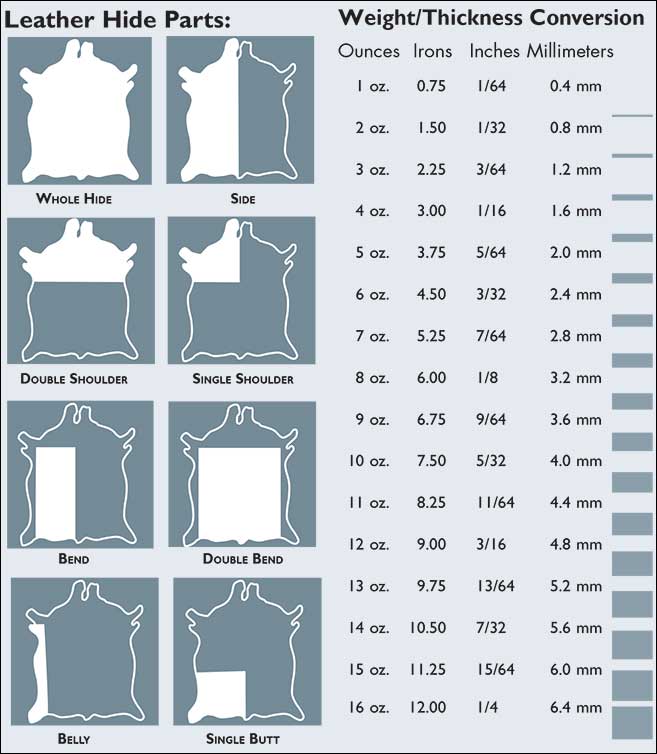
Weight/Thickness Conversion
| Ounces | Inches | Millimeters | Visual |
|---|---|---|---|
| 1 oz | 0.04" | 1.0 mm | |
| 2 oz | 0.08" | 2.0 mm | |
| 3 oz | 0.12" | 3.0 mm | |
| 4 oz | 0.16" | 4.0 mm | |
| 5 oz | 0.20" | 5.0 mm | |
| 6 oz | 0.24" | 6.0 mm | |
| 7 oz | 0.28" | 7.0 mm | |
| 8 oz | 0.32" | 8.0 mm | |
| 9 oz | 0.36" | 9.0 mm | |
| 10 oz | 0.40" | 10.0 mm | |
| 12 oz | 0.48" | 12.0 mm | |
| 14 oz | 0.56" | 14.0 mm | |
| 16 oz | 0.64" | 16.0 mm |
Common Terminology
Aniline Dyed
Leather that has been dyed with transparent dyes that allow the natural grain to show through.
Back Tanned
Leather that has been tanned on both the grain and flesh sides for added strength.
Belly Cut
The softer, more flexible part of the hide from the animal's belly area.
Chrome Free
Leather tanned without the use of chromium salts, using vegetable or other tanning methods.
Chrome Tanned
Leather tanned using chromium salts, resulting in soft, supple leather.
Crushed
Leather that has been mechanically compressed to create a unique texture.
Distressed
Leather that has been artificially aged or weathered for a vintage appearance.
Drum Dyed
Leather dyed in a rotating drum for even color penetration.
Embossed Leather
Leather with a pattern pressed into its surface using heat and pressure.
Flesh Side
The underside of the leather, opposite to the grain side.
Full Grain
The highest quality leather with the natural grain surface intact.
Goat Leather
Leather made from goat hide, known for its softness and flexibility.
Grain Side
The outer surface of the leather with the natural grain pattern.
Hair Cell Grain
The natural pattern of hair follicles visible on the leather surface.
Hair-on
Leather that retains the animal's hair or fur on one side.
Kidskin
Very soft, fine leather made from young goat hide.
Latigo
Heavy, oil-tanned leather used for horse tack and heavy-duty applications.
Milled
Leather that has been tumbled in a drum to soften and create texture.
Naked
Leather without any finish or protective coating.
Oil Tanned
Leather tanned using oils, resulting in water-resistant, flexible leather.
Pebble Grain
Leather with a small, pebble-like texture pressed into the surface.
Pigmented Leather
Leather with opaque color applied to the surface, hiding the natural grain.
Pull-up Leather
Leather that changes color when stretched or pulled, creating a unique effect.
Rawhide
Untanned animal hide, often used for dog chews and traditional crafts.
Semi-Aniline
Leather with a light protective coating over aniline dye.
Shearling
Leather with the wool still attached, often used for boots and jackets.
Skirting
The outer edges of a hide, often used for straps and belts.
Split
The lower layer of leather after the top grain has been removed.
Suede
Leather with a napped surface, created by buffing the flesh side.
Temper
The stiffness or flexibility of leather, ranging from soft to firm.
Tooling Calf
Soft, vegetable-tanned leather ideal for carving and stamping.
Top Grain
The upper layer of leather, often sanded and finished.
Veg Tanned
Leather tanned using vegetable extracts, resulting in firm, natural leather.
Veg Splits
The lower layers of vegetable-tanned leather.
Weight
The thickness of leather measured in ounces per square foot.
Wet Blue
Chrome-tanned leather in its wet, blue-colored state before finishing.
Conversion from Yardage to Sq. Ft.
When working with leather, it's important to understand the conversion between different measurement units. One square yard equals 9 square feet, and this conversion is crucial for accurate material planning and cost estimation.